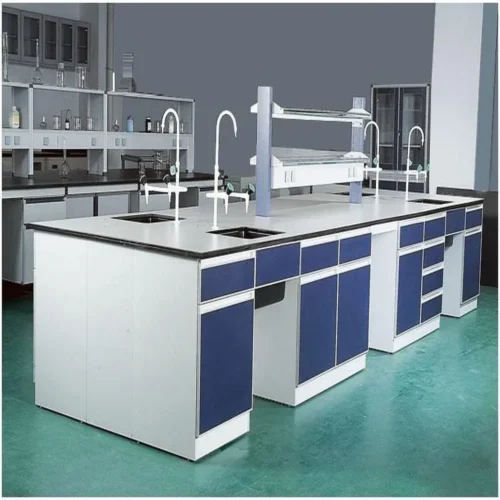

A laboratory is a highly specialized working environment where precision, organization, ergonomics, accessibility, safety, and workflow efficiency are important for everyday operations. Whether it is a research laboratory, educational laboratory, pharmaceutical facility, healthcare laboratory, testing center, or industrial laboratory, the quality and configuration of laboratory furniture can have a significant impact on productivity.
Laboratory furniture is not simply a collection of tables and cabinets. Properly designed laboratory work benches, laboratory tables, storage cabinets, workstations, drawers, and storage systems can contribute to better workspace optimization, material accessibility, equipment organization, and operational efficiency.
A well-planned laboratory environment allows personnel to access frequently used equipment and materials conveniently while maintaining a structured and uncluttered workspace.
This makes laboratory furniture an important component of modern laboratory infrastructure.
What Is Laboratory Furniture?
Laboratory furniture refers to specialized furniture designed to support scientific, technical, educational, testing, research, and analytical activities.
Unlike conventional office furniture, laboratory furniture is designed around the specific requirements of laboratory workflows.
Common laboratory furniture includes:
- Laboratory Work Benches
- Laboratory Tables
- Laboratory Workstations
- Laboratory Storage Cabinets
- Laboratory Drawers
- Under-Counter Cabinets
- Equipment Storage Units
- Laboratory Shelving Systems
- Mobile Storage Solutions
- Specialized Laboratory Furniture
The selection of furniture depends on the laboratory’s functional requirements, available space, equipment configuration, workflow, storage requirements, and operating environment.
Why Is Laboratory Furniture Important for Working Efficiency?
Laboratory efficiency depends on much more than laboratory equipment.
The arrangement of furniture can influence how laboratory personnel move, access equipment, organize materials, perform testing procedures, and maintain their work areas.
Appropriate laboratory furniture can help improve:
- Workspace organization
- Equipment accessibility
- Material handling
- Storage efficiency
- Workflow management
- Space utilization
- Employee comfort
- Workplace productivity
- Laboratory housekeeping
- Operational consistency
How Laboratory Furniture Improves Working Efficiency
Lorem ipsum dolor sit amet, consectetur adipiscing elit. Ut elit tellus, luctus nec ullamcorper mattis, pulvinar dapibus leo.
1. Optimizes Laboratory Workspace
When furniture dimensions and placement are planned correctly, laboratory personnel can perform tasks without unnecessary movement or workspace congestion.
2. Improves Equipment Accessibility
Laboratories may contain instruments and equipment that are frequently used during daily operations.
Properly positioned laboratory furniture can help keep frequently required equipment within convenient reach.
This can improve workflow continuity and reduce time spent moving between workstations.
3. Enhances Laboratory Storage Management
Storage is an important component of laboratory organization.
Laboratory storage cabinets, drawers, racks, and shelving systems can provide dedicated locations for equipment, accessories, documents, samples, and other materials.
An organized storage system can reduce workspace clutter and improve material accessibility.
4. Reduces Unnecessary Movement
Poorly arranged furniture can force laboratory personnel to repeatedly walk between workstations, storage areas, and equipment.
A well-designed laboratory layout can reduce unnecessary movement by placing related workstations, equipment, and storage solutions in logical locations.
This contributes to a more efficient workflow.
An organized storage system can reduce workspace clutter and improve material accessibility.
5. Supports Ergonomic Working Conditions
Ergonomics is another important factor in laboratory workspace planning.
Ergonomic laboratory furniture can help create working conditions that are more appropriate for repetitive laboratory tasks.
Work surface height, accessibility, seating, equipment positioning, and workstation configuration should be considered according to the intended activity.
6. Helps Maintain an Organized Workspace
A cluttered laboratory can make routine tasks more difficult.
Appropriate storage cabinets, drawers, shelves, and work benches provide dedicated locations for laboratory materials.
This supports better laboratory housekeeping and workspace organization.
7. Improves Space Utilization
Laboratories often have limited usable space.
Modular and appropriately configured laboratory furniture can help maximize available space without compromising the functionality of the workspace.
Storage can be integrated beneath work surfaces, against walls, or into designated laboratory zones depending on the layout.
The Role of Laboratory Work Benches in Productivity
Laboratory Work Bench as a Functional Workspace
The laboratory work bench is one of the most important furniture components in many laboratories.
It can provide a dedicated area for:
- Research
- Testing
- Sample preparation
- Documentation
- Instrument handling
- Quality-control activities
- Educational experiments
A properly selected work bench should be appropriate for the intended workload, equipment, working height, dimensions, and laboratory environment.
Laboratory Work Bench and Workflow Efficiency
A strategically positioned work bench can create a more logical workflow.
For example, frequently used equipment can be placed near the primary working area, while related storage can be positioned within convenient access.
This approach can improve operational continuity and reduce unnecessary movement.
Laboratory Storage Solutions for Better Efficiency
Efficient storage is essential for laboratories containing large quantities of equipment, instruments, accessories, files, and consumables.
Laboratory Storage Cabinets
Laboratory storage cabinets provide dedicated storage compartments and can help maintain a structured workspace.
They can be used for storing laboratory accessories, equipment, documents, and other appropriate materials according to the laboratory’s storage policy.
Laboratory Drawers
Drawers can provide quick access to smaller laboratory tools, accessories, stationery, and frequently used items.
Proper categorization of drawer contents can improve retrieval efficiency.
Laboratory Shelving Systems
Shelving systems can provide additional vertical storage and help laboratories utilize available wall or floor space efficiently.
The appropriate shelving configuration should be selected according to load requirements and the intended application.
How Steel Laboratory Furniture Supports Long-Term Efficiency
Steel laboratory furniture can be a practical choice for laboratories requiring durable furniture for regular institutional or industrial use.
Steel furniture can offer:
- Structural strength
- Durability
- Long-term usability
- Organized storage
- Professional appearance
- Multiple configuration options
However, material selection should always be based on the specific laboratory environment and operational requirements.
Powder Coated Laboratory Furniture
Powder coating is a commonly used finishing method for steel furniture.
A suitable powder-coated finish can provide a durable surface and professional appearance while supporting routine maintenance.
For laboratories, the appropriate coating and construction should be selected according to the intended application and environmental conditions.
Benefits of Powder Coated Steel Furniture
Potential advantages include:
- Durable surface finish
- Professional appearance
- Easy routine maintenance
- Resistance to everyday wear
- Consistent finish
- Suitability for institutional applications
Laboratory Furniture for Different Industries
Laboratory furniture requirements differ significantly between industries.
Educational Laboratories
Schools, colleges, universities, and training institutions require laboratory furniture that can withstand frequent use by students and faculty.
Laboratory tables, work benches, stools, cabinets, and storage systems can help create organized educational environments.
Research Laboratories
Research laboratories require workspaces that support experimentation, analysis, documentation, instrumentation, and sample handling.
Furniture planning should therefore focus on workflow, equipment positioning, accessibility, and storage.
Pharmaceutical Laboratories
Pharmaceutical laboratories may require specialized workspaces for research, testing, quality control, and analytical activities.